

Dry Scalp UK: Stop Flakes, Itch & Dryness Fast
- 5 days ago
- 6 min read
One week your scalp feels completely normal, and the next it is tight, flaky and somehow irritated enough to make every wash day feel like a mistake. If you are wondering what causes sudden dry scalp, the short answer is that it is rarely random. Usually, something in your routine, environment or overall skin health has shifted - and your scalp is reacting.
The good news is that sudden dryness does not always mean a serious hair issue. In many cases, it comes down to a few very fixable triggers, especially if you live in the UK where cold air, indoor heating, wind and hard water can all work against a comfortable scalp.
What causes sudden dry scalp all of a sudden?
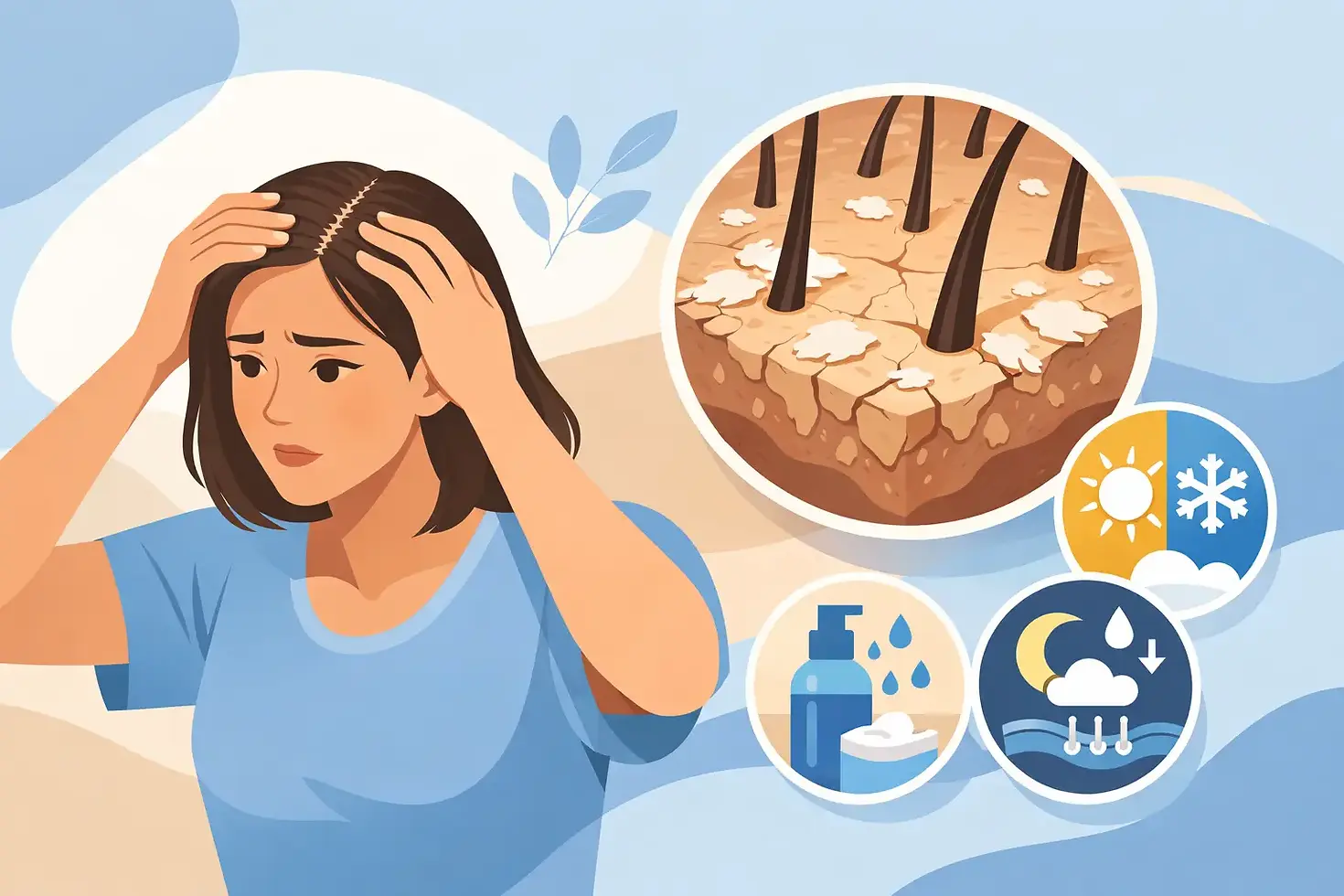
A dry scalp happens when the skin on your scalp loses too much moisture or its natural barrier becomes irritated. That can leave you with tightness, itchiness, fine white flakes and sometimes a stinging feeling after washing or styling. The reason it feels sudden is often because the trigger built up quietly over days or weeks before your scalp reached the point where it could not balance itself properly.
For some women, the change starts with the weather. As soon as temperatures drop, or central heating goes on full blast, the air gets drier and your skin can lose moisture faster. If your face starts feeling dry in winter, your scalp often follows. Windy days do not help either, especially if you are already prone to sensitivity.
Another common reason is overwashing or using a shampoo that is too stripping. If you have recently switched to a clarifying shampoo, an anti-dandruff formula, or one of those shampoos that leaves your hair squeaky clean, that may be the problem. Clean hair is lovely, but a scalp that feels scrubbed raw is not. Some formulas remove oil so aggressively that they disturb the scalp barrier and leave it flaky rather than fresh.
The most common triggers behind sudden scalp dryness
Weather and indoor heating
UK weather can be surprisingly rough on skin and scalp. Cold air outside and dry heated air indoors create a constant back-and-forth that can strip moisture from the scalp. This is especially noticeable in autumn and winter, but some people also get dry scalp in summer from sun exposure and frequent washing.
If your dryness appears with the seasons, that is a clue. You may not need a full routine overhaul - just gentler products and a bit more moisture support while the weather is working against you.
Hard water
Hard water is a big one and often gets overlooked. In many parts of the UK, minerals in the water can leave residue on the scalp and hair. Over time, that build-up can make your scalp feel dry, itchy and uncomfortable, especially if you already use a lot of styling products.
Hard water can also make shampoos harder to rinse properly, so your scalp may end up with product sitting on it longer than it should. That combination of residue and irritation is not ideal.
Product build-up
Dry shampoo, hairspray, scalp serums, mousse, texture sprays - it adds up quickly. Even products designed to help can create problems when they are layered too heavily or not washed out well. Build-up can stop the scalp functioning normally, leading to itching, flakes and that odd tight feeling at the roots.
This is where dry scalp and dandruff can get confused. A dry scalp usually creates smaller, drier flakes. Build-up and dandruff often look oilier or more stubborn. Sometimes both are happening at once, which is why one random shampoo switch does not always solve it.
Harsh haircare products
Fragrance, strong sulphates, alcohol-heavy styling products and overly active scalp treatments can all cause irritation. This is especially true if you have recently started using acids, exfoliating scalp scrubs or intensive cleansing products because they were trending. Not every viral hair product is right for every scalp.
If your symptoms started after introducing something new, pause it for a couple of weeks and see whether your scalp calms down. That simple test can tell you a lot.
Skin conditions
Sometimes what looks like dryness is actually a skin condition showing up on the scalp. Eczema, psoriasis and seborrhoeic dermatitis can all appear quite suddenly or flare when you are stressed, unwell or reacting to weather changes.
Seborrhoeic dermatitis is often mistaken for simple dryness, but it tends to cause more persistent flakes, redness and irritation. Psoriasis usually looks thicker and more defined. If your scalp is sore, inflamed or the flakes are not improving with gentle care, it may be more than basic dryness.
Hormones, stress and general health changes
Your scalp is still skin, so it can react when your body is under pressure. Stress, hormonal changes, not drinking enough water, dietary shifts and certain medications can all affect oil production and skin barrier function. Even a recent illness can leave your skin temporarily more reactive.
This is why some cases of sudden dry scalp do not have an obvious shampoo-related cause. If your routine has stayed the same but your body has been through a stressful patch, that may be the missing link.
How to tell if it is dry scalp or dandruff
This matters because the wrong treatment can make things worse. If you have true dry scalp, using a strong anti-dandruff shampoo too often can increase dryness. If you have dandruff caused by yeast overgrowth or seborrhoeic dermatitis, a moisturising shampoo alone may not do enough.
Dry scalp usually comes with small, white, dry-looking flakes and a feeling of tightness. Dandruff often produces larger flakes and may come with oiliness, redness or a scalp that feels greasy but still itchy. There is overlap, so if you are unsure, look at the full picture rather than the flakes alone.
What to do when your scalp suddenly turns dry
Start by simplifying your routine. Use a gentle shampoo for a couple of weeks and avoid anything labelled deep cleanse, detox or clarifying unless you truly need it. Wash with lukewarm water rather than hot, because heat can strip the scalp even more.
If you use dry shampoo often, cut back for a bit and make sure you are washing thoroughly when you do cleanse. If hard water is an issue where you live, a shower filter may help, or you could use a gentle chelating treatment occasionally rather than constantly attacking your scalp with stronger cleansers.
It also helps to rethink how often you wash. For some people, daily washing with a mild shampoo works well. For others, stretching wash days too far leads to build-up and irritation. It depends on your scalp type, hair texture and how many styling products you use. The aim is balance, not copying someone else's routine from TikTok.
A lightweight scalp serum or pre-wash treatment can be useful if your scalp feels tight and uncomfortable, but choose one designed to soothe rather than heavily perfume the area. Look for calming, barrier-friendly ingredients and avoid piling on oils if your scalp already feels congested.
When sudden dry scalp needs more than a routine tweak
If your scalp is very itchy, red, sore, cracking, or shedding thicker patches of skin, it is worth speaking to a pharmacist or GP. The same goes if the problem keeps coming back or does not improve after two to four weeks of gentler care. Persistent scalp issues are not something to just cover up with dry shampoo and hope for the best.
Hair loss alongside scalp inflammation is another sign to take seriously. A few extra hairs during a stressful period can be normal, but ongoing shedding with irritation deserves proper advice.
Small habits that can help prevent it happening again
Once your scalp settles, keep things simple. Rotate in stronger scalp products only when needed, not every wash day. Rinse well, especially if you live in a hard water area. Be cautious with heavy styling products around the roots, and do not assume more exfoliation always equals a healthier scalp.
Most of all, pay attention to timing. If your scalp reacts every winter, every time you travel to a hard water area, or every time you try a highly fragranced shampoo, that pattern is useful. Your best routine is the one that keeps your scalp comfortable consistently, not the one that promises the most dramatic before-and-after.
A sudden dry scalp can feel annoying and surprisingly hard to ignore, but it is often your scalp asking for less stress, less stripping and a bit more balance. Once you spot the trigger, getting back to calm, comfortable roots is usually much easier than it first seems.


Comments